Elfreth, Kurtz, Behler, and Severn River Association Celebrate Whole Watershed Program Projects
|
Image
|
Image
|
Image
|
|---|---|---|
|
Image
|
Image
|
Image
|
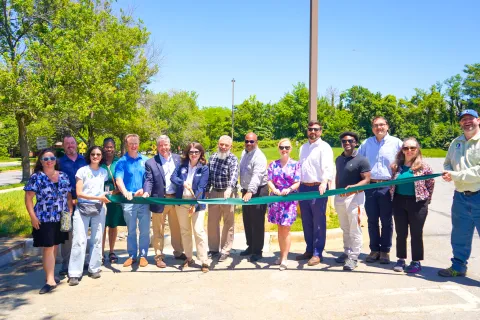
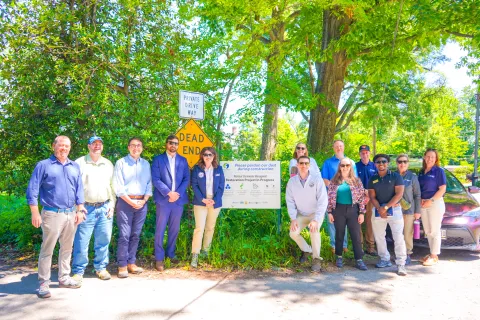
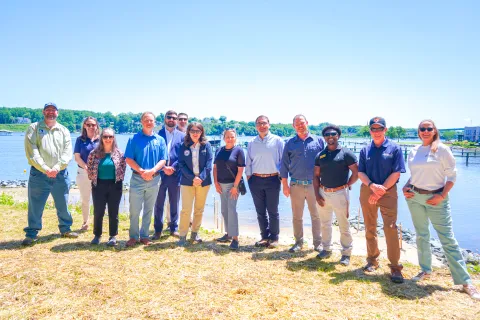
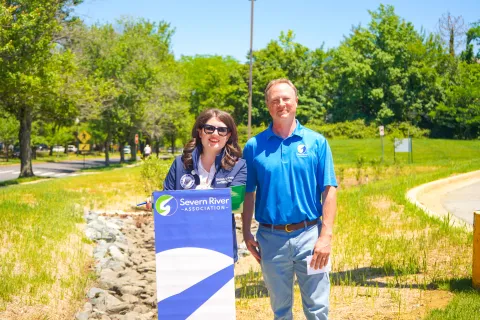
ANNAPOLIS, MD – Yesterday, Congresswoman Sarah Elfreth (MD-03), Vice Ranking Member of the House Natural Resources Committee and Co-Chair of the Chesapeake Bay Watershed Taskforce, Maryland Secretary of Natural Resources Josh Kurtz, Delegate Dana Jones, Delegate Dylan Behler, Alderman Frank Thorp, and the Severn River Association participated in a ribbon cutting for the Key Point Giant Stormwater Management, which is a project in the Severn River Watershed under the Whole Watershed Program.
The Severn River Watershed is one of the five pilot projects of the Whole Watershed Program, which Elfreth established through the Whole Watershed Act while serving in the Maryland General Assembly in 2024. The Key Point Giant project, just one of dozens of similar projects to be implemented in the Severn watershed, has received $254,109 in state and nonprofit funding to install two urban micro-bioretention facilities with native vegetation to treat 1.04 acres of land. The two bioretention pools will substantially reduce the amount of trash and pollution that enters the storm drain and exits to Back Creek, a tributary of the Severn River.
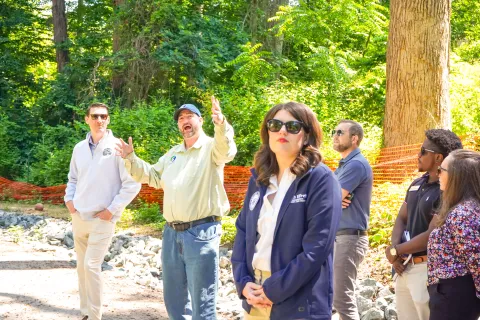
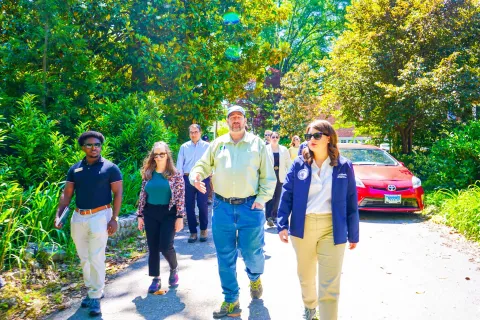
Earlier that day, the principals also toured the Wardour Stormwater Management Project, which has received $147,000 in state funding to provide stormwater management through a series of infiltration cells planted with native vegetation to treat 11.98 acres of land. Previously, stormwater from the community went into a pipe and came directly out into the Severn River, carrying pollutants and sediment. Slowing the stormwater down by creating a series of small spaces that follow a gentler slope filters out pollutants and captures eroded sediments. This will substantially improve the health of the Severn River and protect nearby restored oyster sanctuary reefs.
“We drafted the Whole Watershed Act because I knew that we needed to think bigger, be bolder, and move faster to protect the Chesapeake Bay. With these Whole Watershed Program projects in the Severn River Watershed, we are seeing meaningful progress made under this intentional, collaborative, and science-backed approach. I’m grateful to Secretary Kurtz, Delegate Behler, and the Severn River Association for their diligent work and partnership to see this work to fruition and make a meaningful difference in our communities,” said Congresswoman Elfreth.
“The projects we viewed today in the Severn River watershed are forerunners to the broader system of pollution reduction projects we’re working on in five diverse watersheds across Maryland through the Whole Watershed Program,” said Maryland Department of Natural Resources Secretary Josh Kurtz. “By grouping together stormwater management solutions such as bioretention pools, rain gardens, stream restorations, tree plantings, and upgrades to wastewater treatment plants in a subwatershed, we can more effectively treat the diffuse sources of pollution reaching a specific waterway. I want to thank Rep. Elfreth and Del. Behler for their vision and leadership on this issue at the state and federal levels. We’re confident this program will serve as a nationwide example of how to identify and systematically address pollution sources from the land that are harming our waterways.”
“Government is at its best when we are breaking down silos, building partnerships at every level, and finding creative solutions to the challenges facing our communities,” said Delegate Dylan Behler. “Thanks to Congresswoman Elfreth’s leadership, the Whole Watershed Act represents a major shift in how we approach Chesapeake Bay restoration by following the science and focusing our efforts in a more strategic, collaborative, and comprehensive way. These projects in the Severn River watershed are proof that when we work together, we can deliver meaningful results for the health of our waterways and the future of the Bay.”
“The Severn River Association has been delighted to be involved in the whole watershed act process from inception. We are even more so to be the first of whole watershed partners to have put a project in the ground and happy to welcome Representative Elfreth and her team to this visit to celebrate this pivotal legislation,” said Jesse Iliff, Executive Director of the Severn River Association.
"I am grateful to see the first fruits of Congresswoman Elfreth's vision in the ground and working from Day 1. This has happened with sustained and coordinated efforts of a broad coalition of organizations working on projects connected throughout the Severn River watershed. These projects are vital to restoring and protecting our precious natural resources and will lead us along the path to a thriving Severn River,” said Ben Fertig, Severn River Association Restoration Manager.
In 2024, Elfreth and Delegate Sara Love led the passage of the Whole Watershed Act (SB 969/HB 1165), which established a first-of-its-kind, collaborative, and science-based approach to restoring the Chesapeake Bay Watershed, known as the Whole Watershed Program. This legislation aimed to stop the cycle of random acts of restoration and leverage existing funding to act more effectively and efficiently on restoration projects by building upon the findings of 180 scientists who studied decades of Chesapeake Bay restoration efforts. In March of this year, Elfreth introduced the Maryland Whole Watershed Program Federal Partnership Act with Senator Angela Alsobrooks to empower the Environmental Protection Agency (EPA) to collaborate with state and local partners to support restoration projects across the Chesapeake Bay Watershed.
Elfreth has dedicated a majority of her career to preserving the Chesapeake Bay. Beyond passing the Whole Watershed Act, Elfreth also chaired the tri-state, bipartisan Chesapeake Bay Commission in the Maryland State Senate to coordinate restoration and conservation efforts across the Chesapeake Bay Watershed. In Congress, she continues to advocate for the Bay on the House Natural Resources Committee and the bipartisan Chesapeake Bay Watershed Taskforce.
###